Paris, around 1925

Designed for fabric. Kept on paper for a hundred years.

E. A. Séguy drew his butterflies for a textile house: patterns for cloth, wallpaper and fashion. They ended up in museum collections instead. We are putting them back on silk.

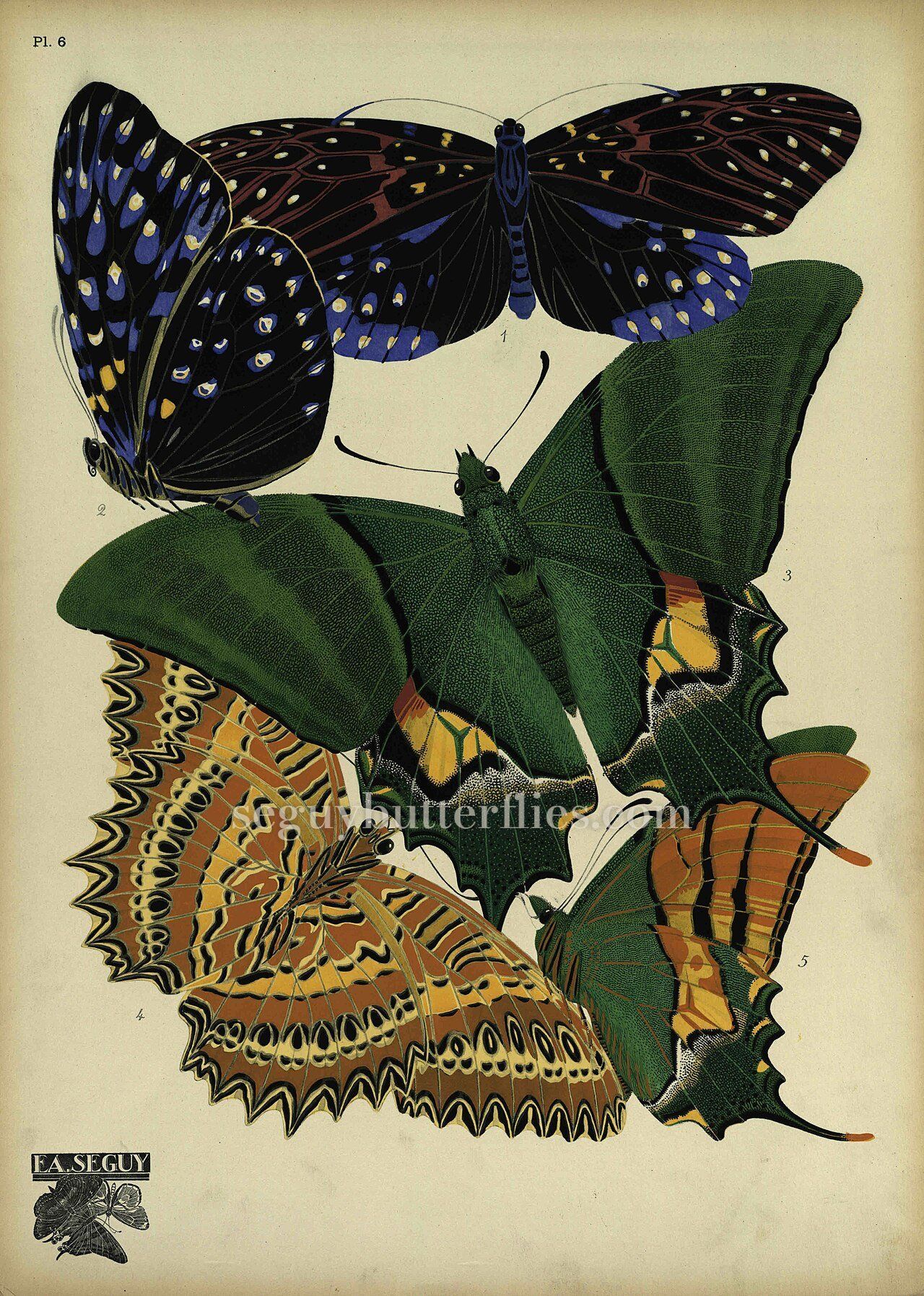
E. A. Séguy, Papillons, plate 6: five butterflies in green, blue and ochre, pochoir print, Paris 1920s
Papillons, plate 6. The butterflies as he studied them.
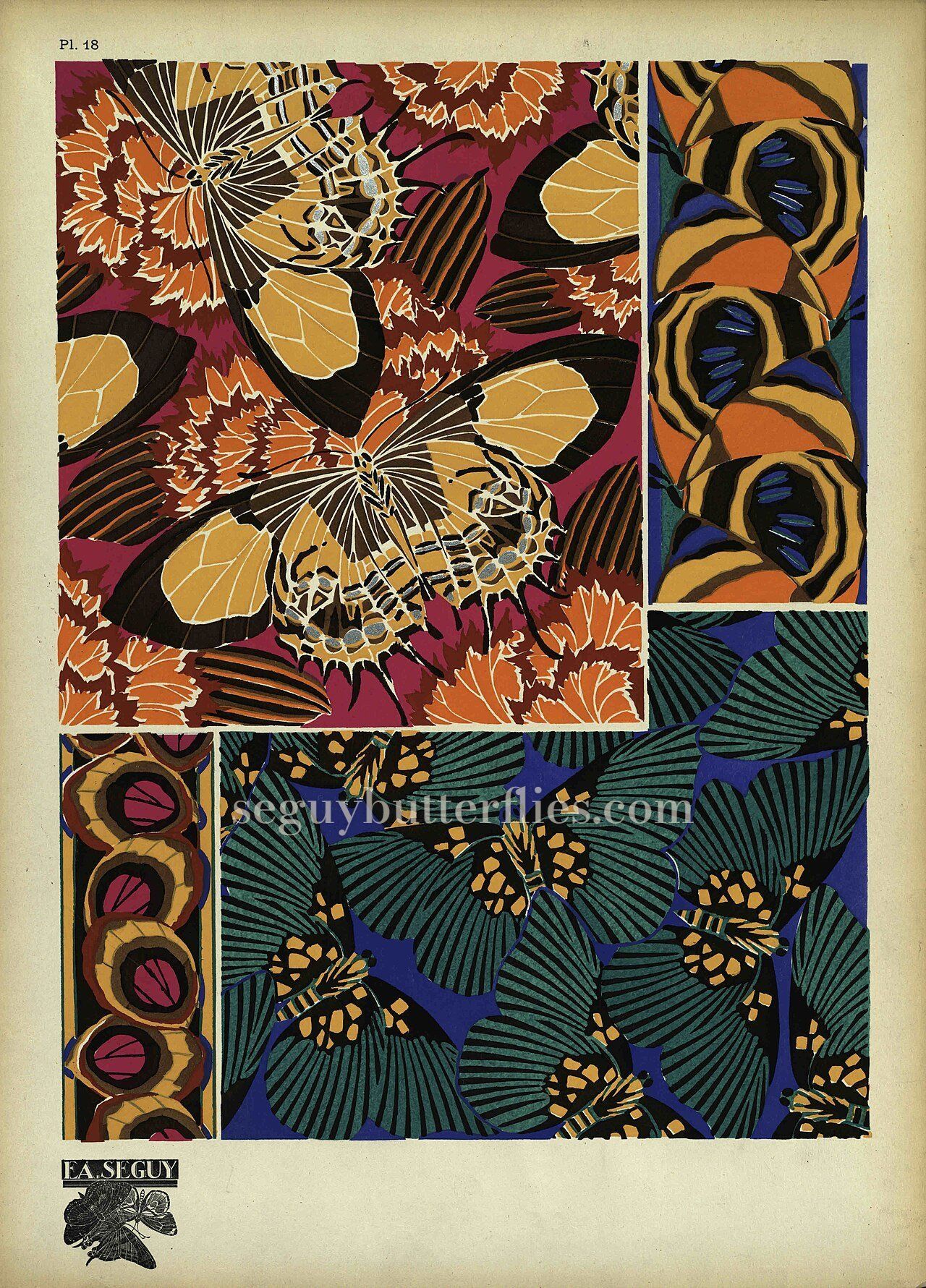
E. A. Séguy, Papillons, plate 18: four Art Deco textile patterns built from butterfly wings
Plate 18. The same wings, turned into pattern.

The butterflies a textile house ordered

Émile-Allain Séguy (1877–1951) was a Paris designer who worked between Art Nouveau and Art Deco. He did not paint butterflies to be framed. He was asked for designs a factory could print.

The result was Papillons: twenty loose plates in a portfolio. Sixteen show 81 butterflies from India, New Guinea, the Amazon, Madagascar and beyond, each one drawn from scientific illustrations and listed by species and origin. The last four plates show what he made of them: sixteen repeating patterns, ready for cloth.

The Metropolitan Museum of Art describes the plates as designs likely meant for textiles and wallpapers. A century later, most people know them only as prints on a wall.

  1. 1920 The New York textile house F. Schumacher & Co. commissions Papillons for use on fabric, wallpaper and fashion, according to the Biodiversity Heritage Library.
  2. c. 1925 Tolmer publishes the portfolio in Paris. Every colour is laid by hand through a stencil.
  3. 1925 The Metropolitan Museum of Art in New York acquires a copy.
  4. Now The designs go back onto fabric.
“Un monde somptueux de formes et de couleurs.” Séguy on butterflies, in his foreword to Papillons: a sumptuous world of forms and colours.

From wing to pattern

This is the step that sets Séguy apart from a natural-history illustrator. He looked at a wing the way a textile designer looks at a swatch: as bands, eyes, borders and repeats. Then he cut the insect away and kept the pattern.

Art Nouveau gave him the love of nature. Art Deco gave him the geometry. Papillons sits exactly where the two meet.

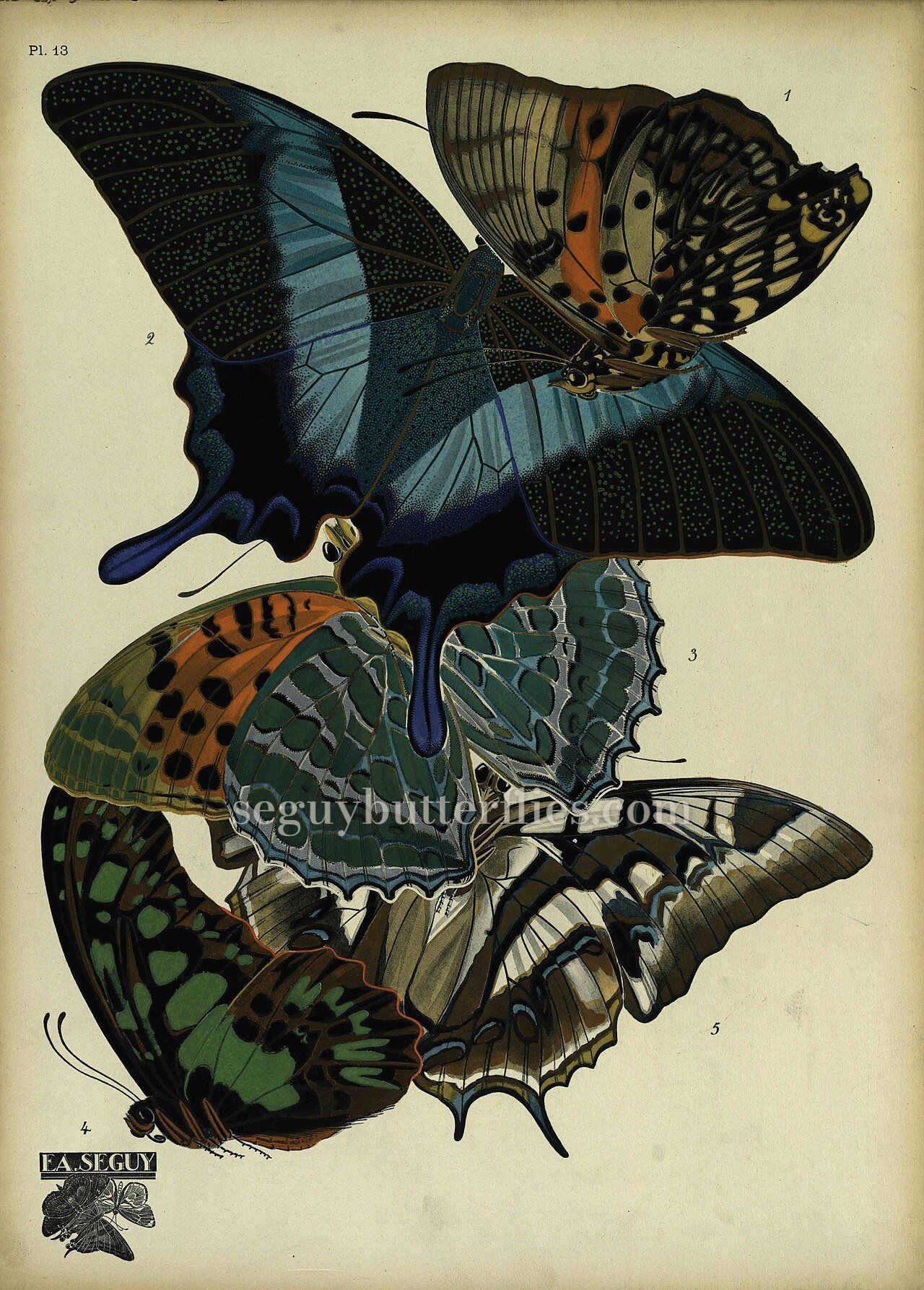
E. A. Séguy, Papillons, plate 13: butterflies in blue, red and yellow
Plate 13, studied from nature
becomes cloth
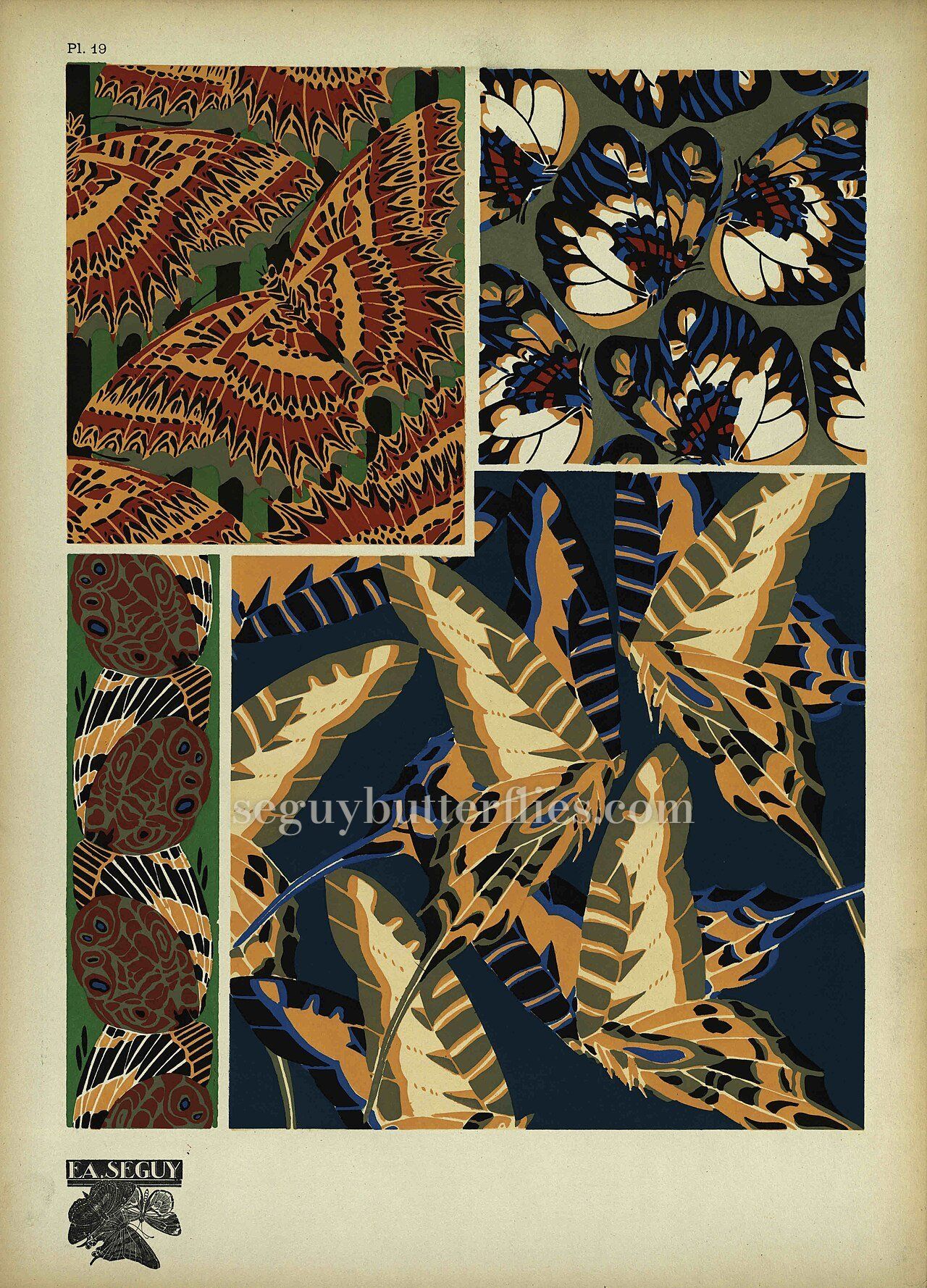
E. A. Séguy, Papillons, plate 19: four decorative butterfly patterns for textiles
Plate 19, drawn as a repeat

Colour, laid by hand

The plates are pochoir prints. The outlines were printed photographically; every colour was then brushed on by hand through its own cut stencil, one layer after another.

That is why the colours look the way they do: dense, flat and saturated, closer to gouache than to ink, with some passages heightened in silver. It was slow, costly work, which is one reason so few complete portfolios survive.

Where the originals are kept

The albums Séguy published as working material are now held in museum and library collections.

Collection Holds
The Metropolitan Museum of Art Papillons, acquired in 1925, with Samarkande, Suggestions pour étoffes et tapis and Bouquets et frondaisons
Smithsonian Libraries Papillons
Bibliothèque nationale de France Samarkande

Our pieces are new textiles and prints after Séguy's designs, not original pochoirs.

More than butterflies

Papillons is one album among about a dozen. Between 1902 and 1933 Séguy published flowers, oriental ornament, insects and pure geometry, always as working material for the makers of fabric, wallpaper and carpets.

One title says it outright: Suggestions pour étoffes et tapis, suggestions for fabrics and carpets. The butterflies made him famous. The other albums show how wide his eye was, and they are part of this collection too.

  1. 1902 Les fleurs et leurs applications décoratives. Flowers, turned into ornament.
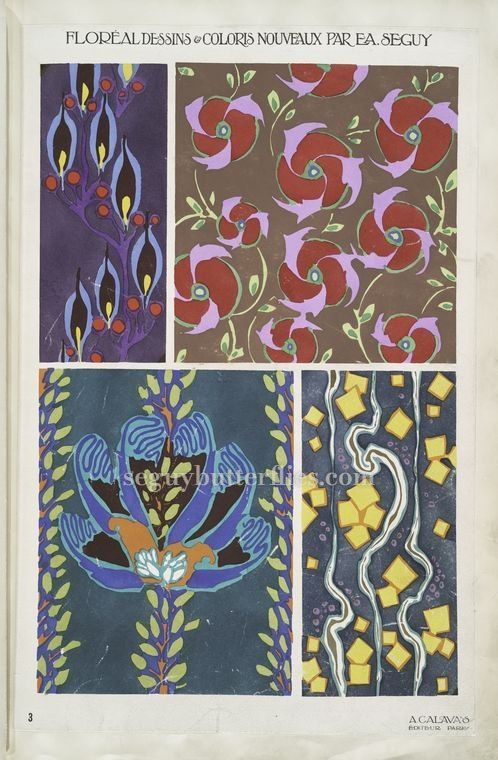
  2. 1914 Floréal. New designs and colourways, several patterns to a plate.
  3. 1920 Samarkande. Twenty compositions in the oriental style.
  4. 1924 Suggestions pour étoffes et tapis. Sixty motifs for fabrics and carpets.
  5. 1926 Bouquets et frondaisons. Sixty motifs of flowers and foliage.
  6. 1929 Insectes. Eighty insects and sixteen patterns, the companion to Papillons.
  7. 1933 Prismes. Forty plates of pure Art Deco geometry.
E. A. Séguy, Floréal, 1914: four floral textile patterns, pochoir print
Floréal, 1914
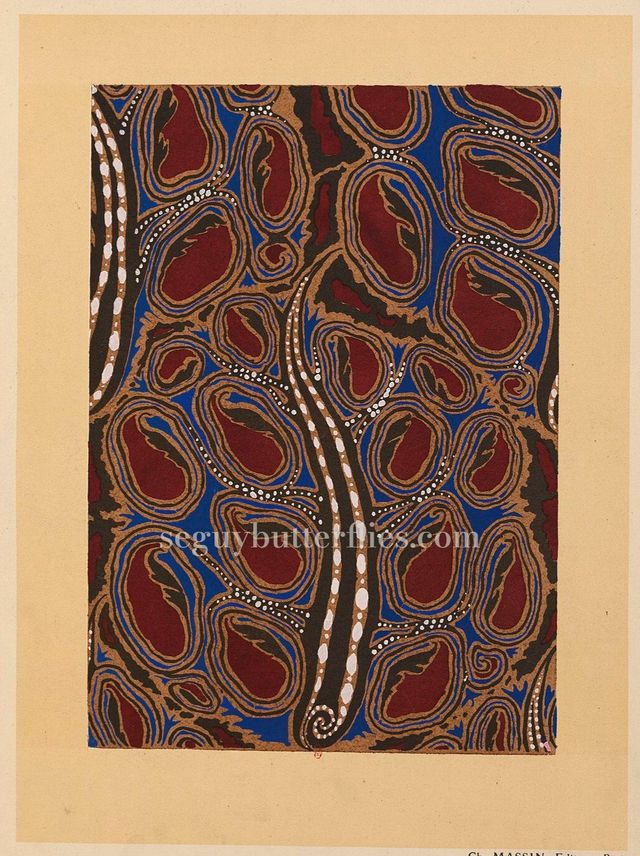
E. A. Séguy, Samarkande, 1920: oriental pattern in red, blue and gold, pochoir print
Samarkande, 1920
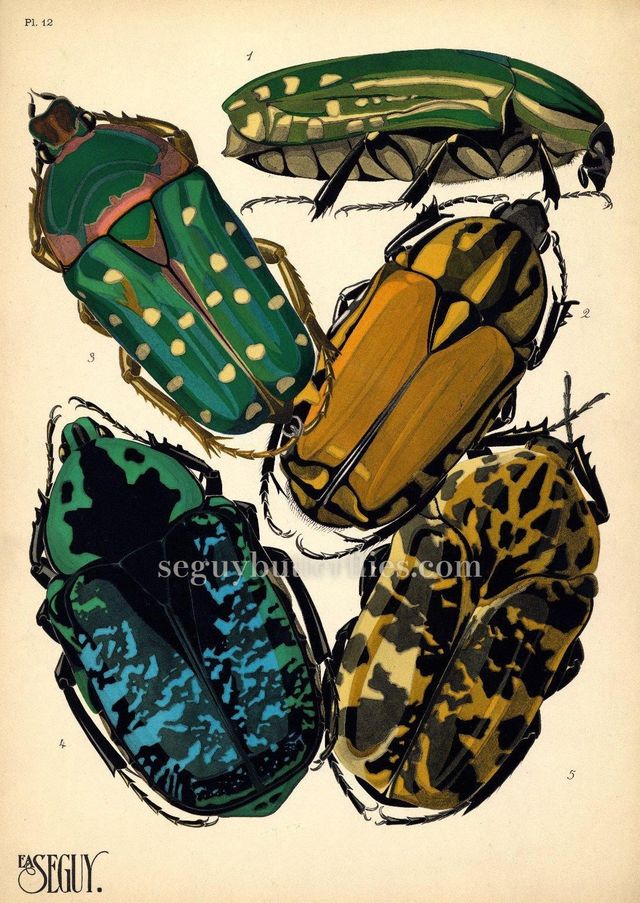
E. A. Séguy, Insectes, 1929: beetles in green, gold and blue, pochoir print
Insectes, 1929
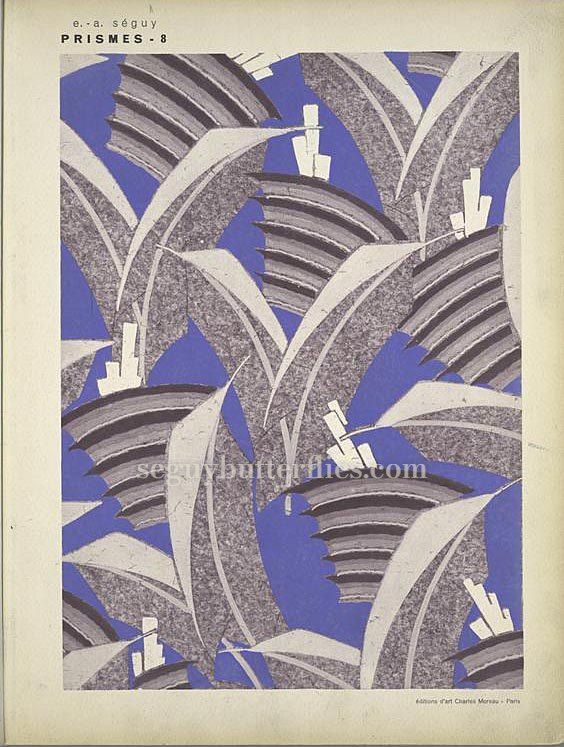
E. A. Séguy, Prismes, 1933: geometric Art Deco pattern in blue and grey, pochoir print
Prismes, 1933

The collection, in the making

The first pieces are in preparation. We are starting small: a few plates, chosen one by one, on materials that do them justice.

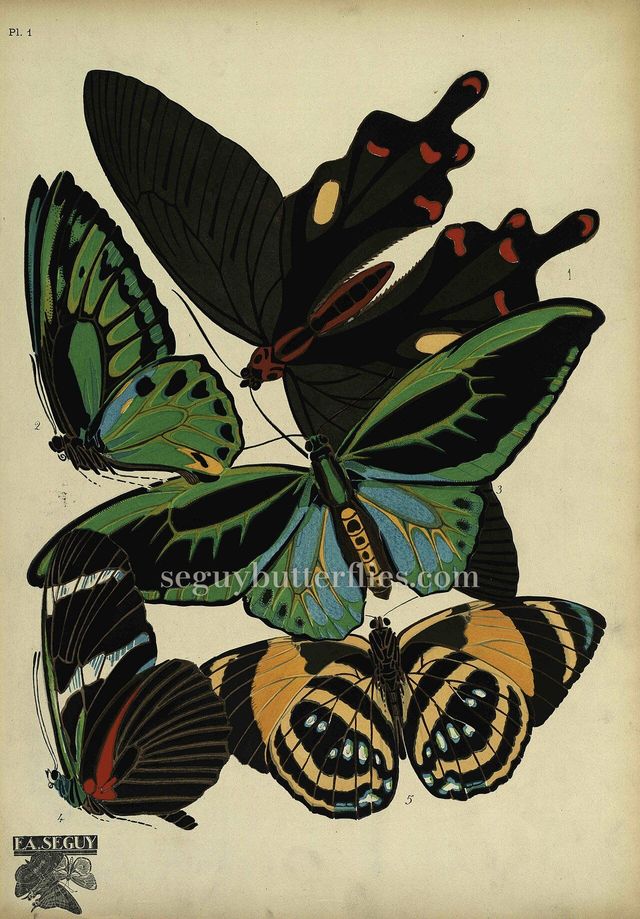
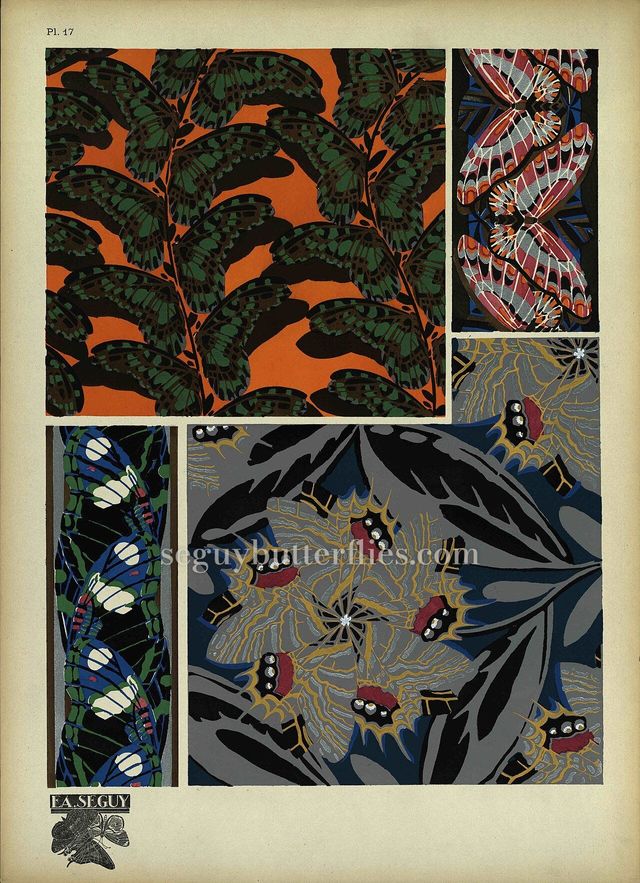
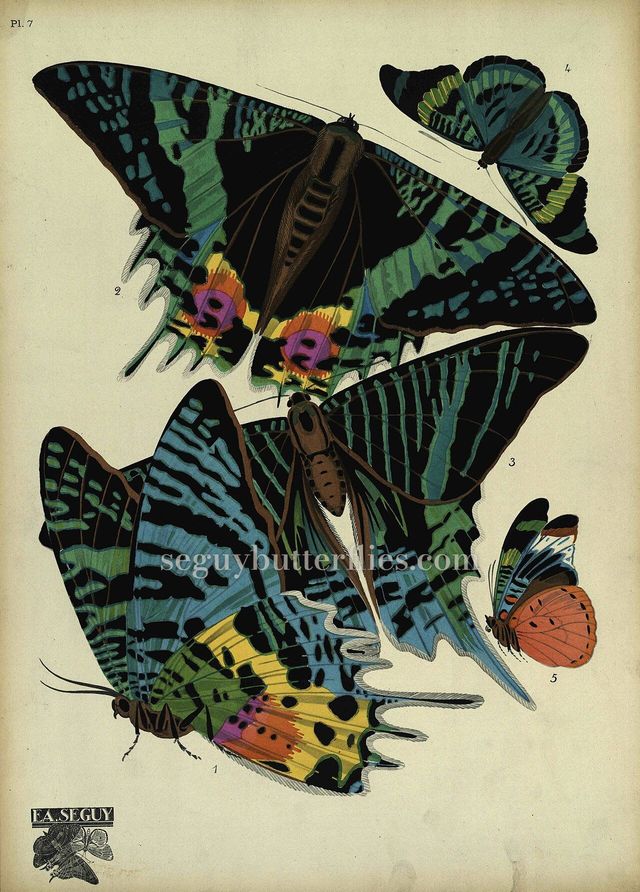
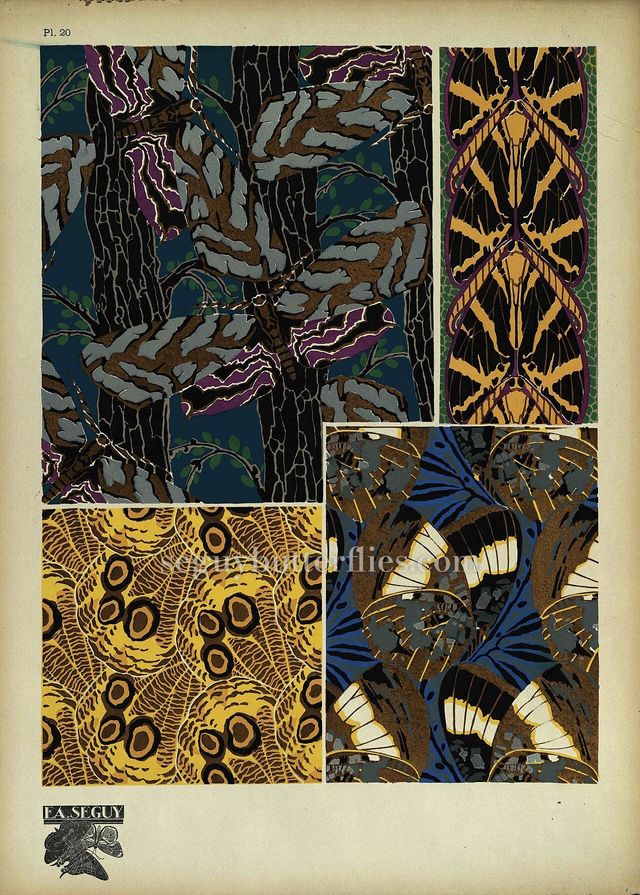
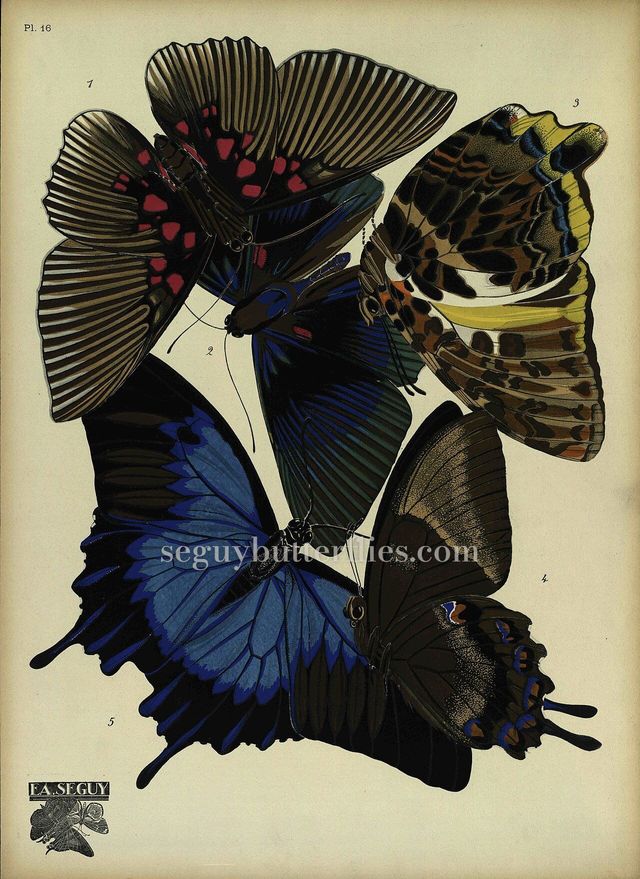
Séguy, Papillons, plate 1Séguy, Papillons, plate 17, textile patternsSéguy, Papillons, plate 7Séguy, Papillons, plate 20, textile patternsSéguy, Papillons, plate 16

Silk scarves

One plate across a full square of silk. The piece the designs were waiting for.

Kimonos

The pattern plates at full repeat, the way Séguy drew them for cloth.

Cushions

A single composition for a sofa or a reading chair.

Fine art prints

The plate as published, for the wall. Museum-quality paper, fair prices.

See the collection first

One email when the first pieces are ready, a few days before anyone else. Nothing else.

Get early access

Not the entomologist

The designer Émile-Allain Séguy (1877–1951) is often confused with Eugène Séguy (1890–1985), a fly specialist at the Paris natural history museum. Even specialist catalogues mix them up. The butterflies are Émile-Allain's.

Sources